Temperament
Many Russian Blues are affectionate with their chosen people, observant with visitors, and happiest with a predictable routine and respectful handling.

Mount Cascade Russian Blues
Russian Blues are known for their silver-blue double coat, graceful build, intelligence, and deep loyalty to their families. This guide explains what daily life with the breed is really like.
Elegant, observant, and devoted
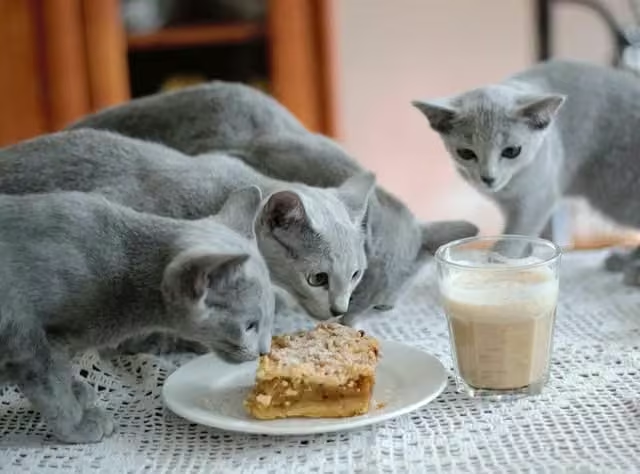
The Russian Blue combines a refined appearance with a thoughtful personality. The coat is short but exceptionally dense, creating a plush texture and a silvery sheen. Eye color develops as kittens mature and is associated with the breed’s vivid green adult expression.
Appearance alone cannot prove pedigree. Several blue-coated cats and mixed-breed cats may resemble a Russian Blue. Registration and pedigree records are the reliable way to document ancestry.
Living with the breed
Many Russian Blues are affectionate with their chosen people, observant with visitors, and happiest with a predictable routine and respectful handling.
Interactive play, climbing options, scratching surfaces, window views, and food puzzles help satisfy their athletic and intelligent nature.
A weekly gentle brushing is often enough for the dense short coat. Shedding varies by season, diet, health, and the individual cat.
Well-socialized Russian Blues can live successfully with considerate children and compatible pets when introductions are gradual and supervised.
The breed can adapt well to apartments when provided with vertical space, daily interaction, exercise, and quiet places to retreat.
Reward-based training can help with carrier comfort, nail handling, household routines, recall, and appropriate scratching habits.
No cat breed is guaranteed to be hypoallergenic. Some allergy sufferers report tolerating individual Russian Blues better than other cats, but reactions vary by person and by cat. Spend time around the breed and consult an allergy professional before committing if allergies are a serious concern.
Individual health depends on genetics, preventive care, nutrition, weight management, environment, and veterinary attention. Keep your cat lean, provide dental care, maintain routine examinations, and contact a veterinarian whenever behavior, appetite, elimination, or energy changes.
Continue researching
Ready for the next step?
Meet our kittens, review the adoption process, or contact our family-run CFA-registered program in Warwick, New York.